Dungeon Hunter 6 Review
Gameloft made a decision to share the IP with another Chinese company. They created a self-playing mess with microtransactions on top.

The Dungeon Hunter series has been around for mobile users since 2009 (or 2010 if we exclude the earlier iPhone release). The premise of all six games has remained the same — among good people appears The Evil Necromancer, who's angry at the world and opens a portal to hell, from which all sorts of monsters pour forth. The player, assuming one of several available classes, must cut through this hellish army, close the gates, and eliminate the necromancer/sorcerer so peace can return to the world.
The first three games were strictly single-player titles focused on hack-and-slash combat against enemies, leveling up, gaining skills and gear, and exploring abandoned crypts, castles, or dungeons. Dungeon Hunter 4 was the first entry that relied entirely on online servers — and completely died off when those servers were shut down. DH5 didn’t change that, but it’s still maintained by Gameloft and offers a single-player campaign, co-op, and asynchronous multiplayer. The game remains popular to this day, but suffers from the well-known “Gameloftosis” — an overbuilt microtransaction system that constantly bombards the player.
One might think things couldn’t get worse — that there’s a limit to how much begging for money can go into a game, beyond which lies only failure. And presumably, Gameloft thought the same, which is why they handed Dungeon Hunter 6 off to GOAT Games, a studio that decided to break that limit. The result is a game that basically plays itself, requiring the user only to spend digital — and real — currency. An absolutely terrible title and a complete waste of bandwidth.
0. TL;DR
Developer: GOAT Games
Release date: 12 Oct 2023
Genre: ARPG, Gacha, Async Multiplayer, Always Online
Price: Free w/ microtransactions
File size: ~5GB
Reviewed on: Motorola Moto G82
Pros: Looks pretty good…
Cons: …but everything is obscured by clutter of pop-ups, ads and MTX begging; plays by itself and skips anything you want to read; vast amount of mechanics that are poorly explained and unneeded; bad English translation
Download: Google Play
Gameplay:                      1/5
Graphics & Audio:          3/5
Monetization:                 2/5

FUN FACTOR: 1/51. Gameplay
The game's story is fairly simple, although it tries to be something unique and different from the previous five entries. An evil necromancer is building a system of towers where portals open, allowing hellish beasts and monsters to cross into the human world and spread terror. Humanity barely manages to resist, but at some point, a Spirit-Kissed Hero appears — someone with the power to control hellish creatures — and decides to face the necromancer and the Forbidden Tower.
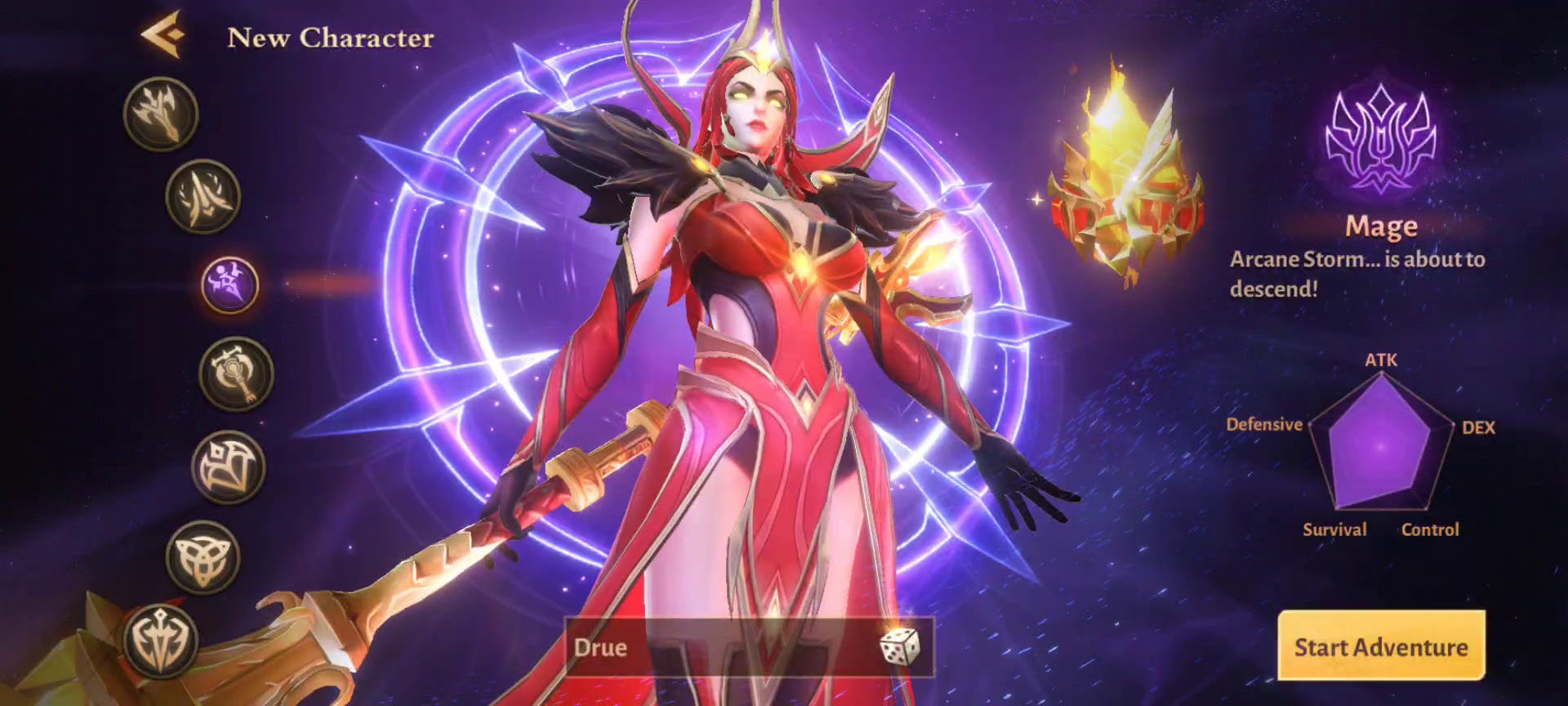
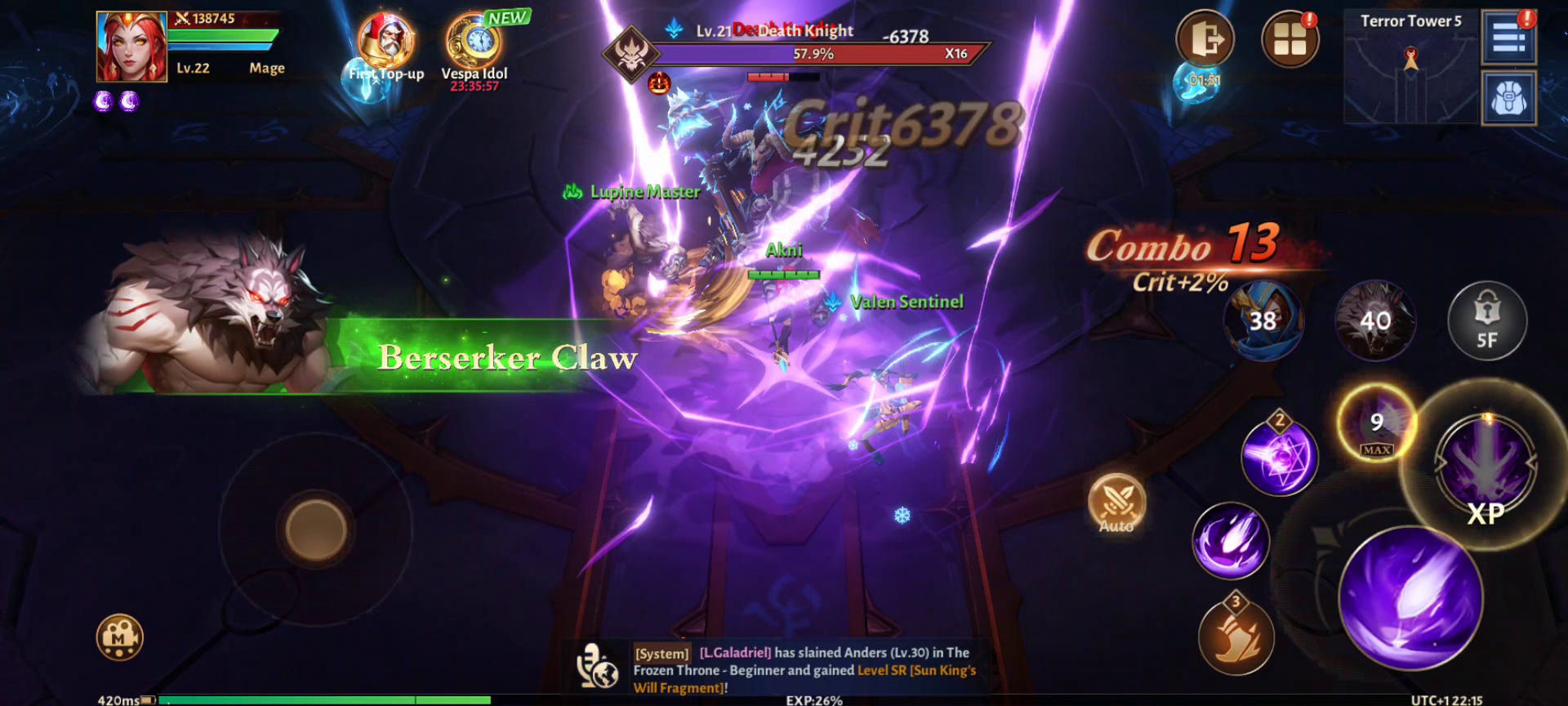
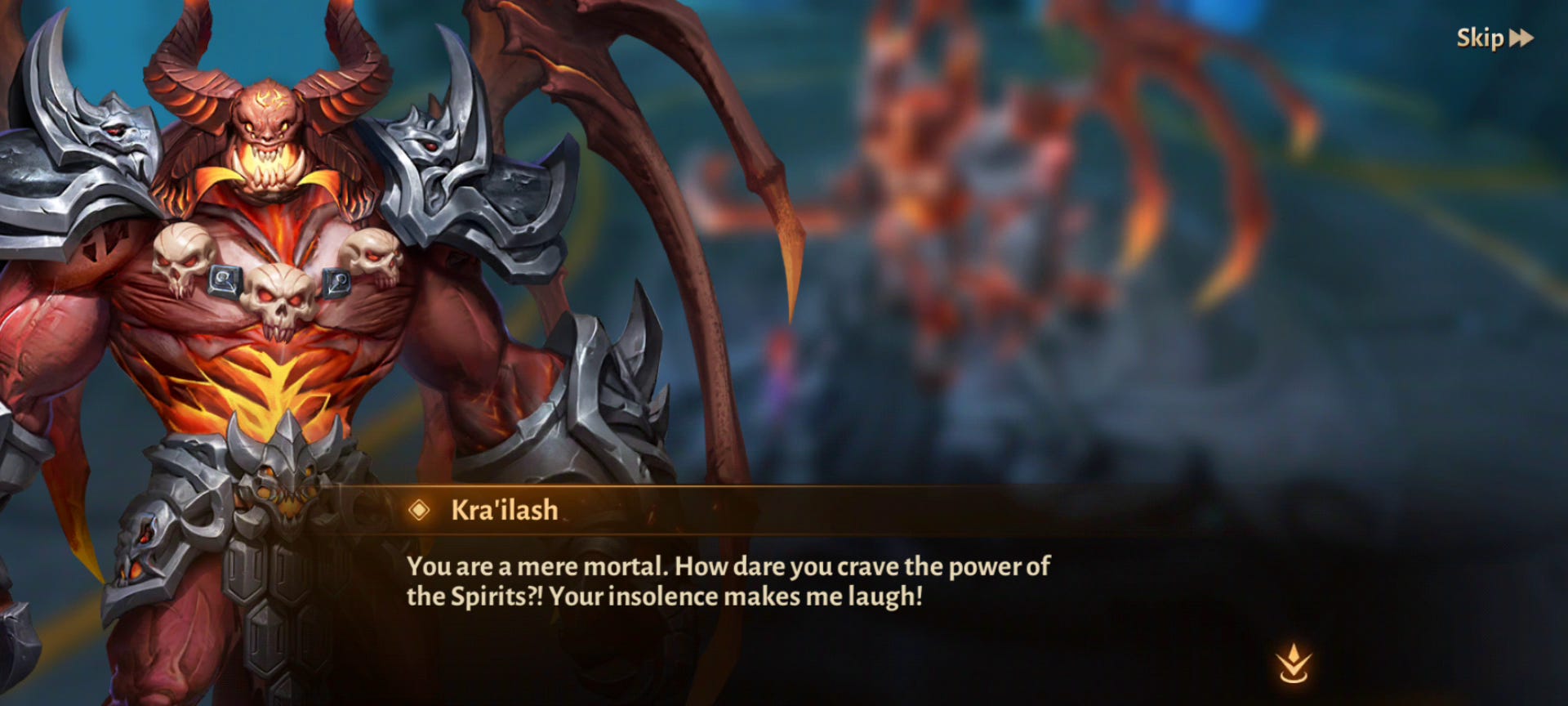
At the start, the player can choose one of seven characters, which differ in appearance, combat style, and abilities. For my review playthrough, I chose the Mage, but honestly, none of the characters really differ much in terms of damage dealt or battle strategy. During the roughly 45-minute tutorial, the game presents the story, shows off boss mechanics, and introduces all the various systems GOAT Games came up with — there’s item collecting with different tiers and rarities, equipment pieces can be combined into stronger versions and upgraded with amulets. You can also recruit Lieutenants — beasts or characters from human or demonic factions — each with their own stats and special attacks. Progression revolves around clearing successive tower levels, each being a small dungeon where you fight a few waves of monsters and then a boss at the end. I want to point out that during my several hours of gameplay, I didn’t encounter a single enemy that posed any real challenge. The game just plays itself, and since the controls are set to auto by default (and the game frequently switches back to auto), I mostly just watched what was happening on screen and occasionally clicked through menus to send my character to a specific point.
Besides that, there are a million other mechanics — guilds, mercenary levelling, upgrading and merging Lieutenants (which are randomly drawn from loot boxes or earned through challenges). There’s even a “dating” system where you can pair up with another player and boost your relationship, which affects your stats. You can customize your character’s appearance and profile to improve combat performance. I don’t even want to describe any more of it — it’s not worth the time.
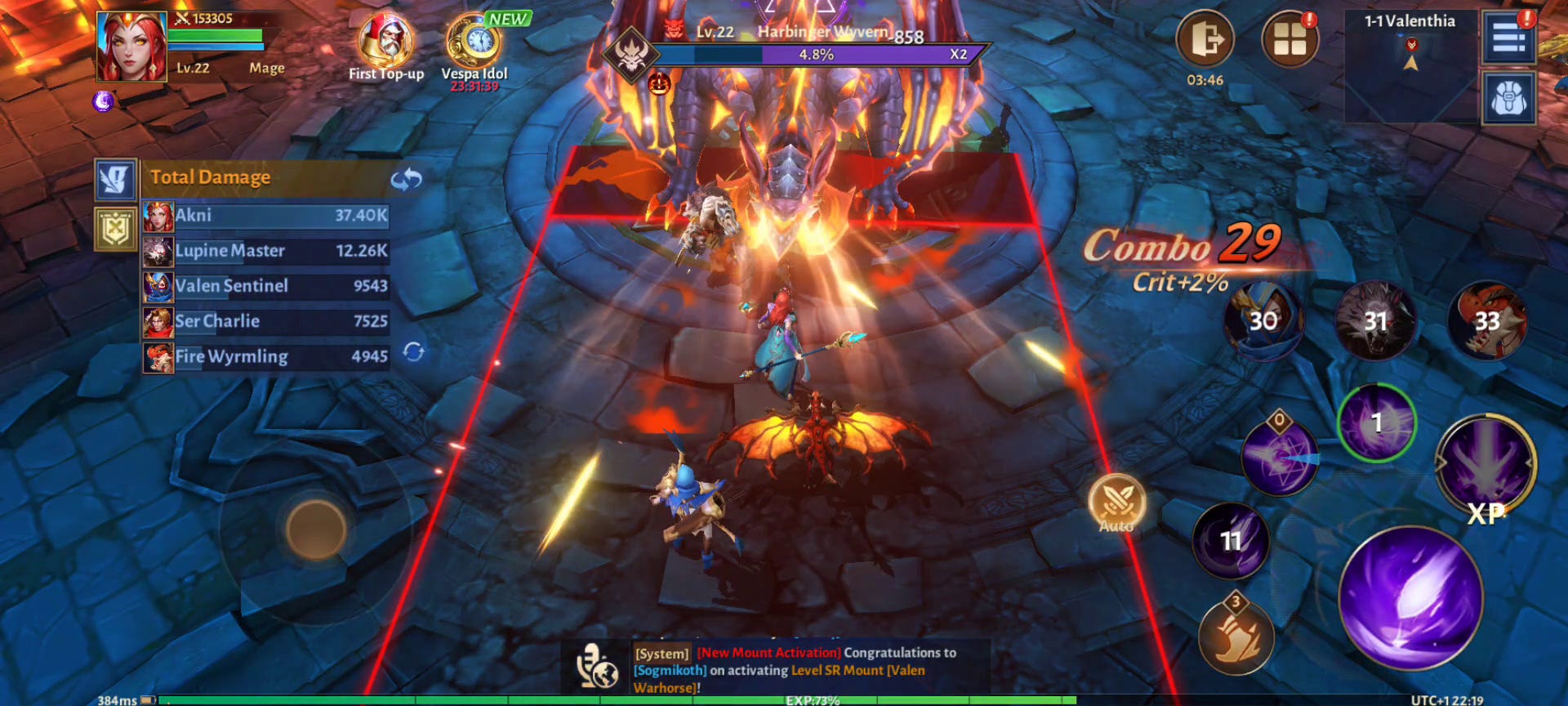
Let me say it again: this game plays itself. It auto-moves the character to talk to NPCs, often skips through dialogue, so you sometimes don’t even know what’s going on. Battles are automated, and the game even starts quests on its own, even if you’re in the middle of checking your formation. The only time it doesn’t skip anything is when it’s begging you to spend money on a premium currency bundle.
2. Visuals, Audio & Performance
Dungeon Hunter 6 looks pretty good, although I’ve read claims that some of the character and enemy models were “borrowed” from another Gameloft game — I didn’t have a chance to verify that myself. The cutscenes are pre-rendered and quite nice, although they’re locked at 30 FPS. The in-game engine cutscenes run more smoothly but appear less often. The UI is also nicely designed — or at least it was until more systems and microtransactions were added, leading to a very cluttered screen. Text often overflows outside of its frame or gets cut off, and you need to click around a lot to figure out what something actually says. A few times, I encountered dialog boxes or other windows with no text at all — presumably because the developers forgot to include an appropriate translation.
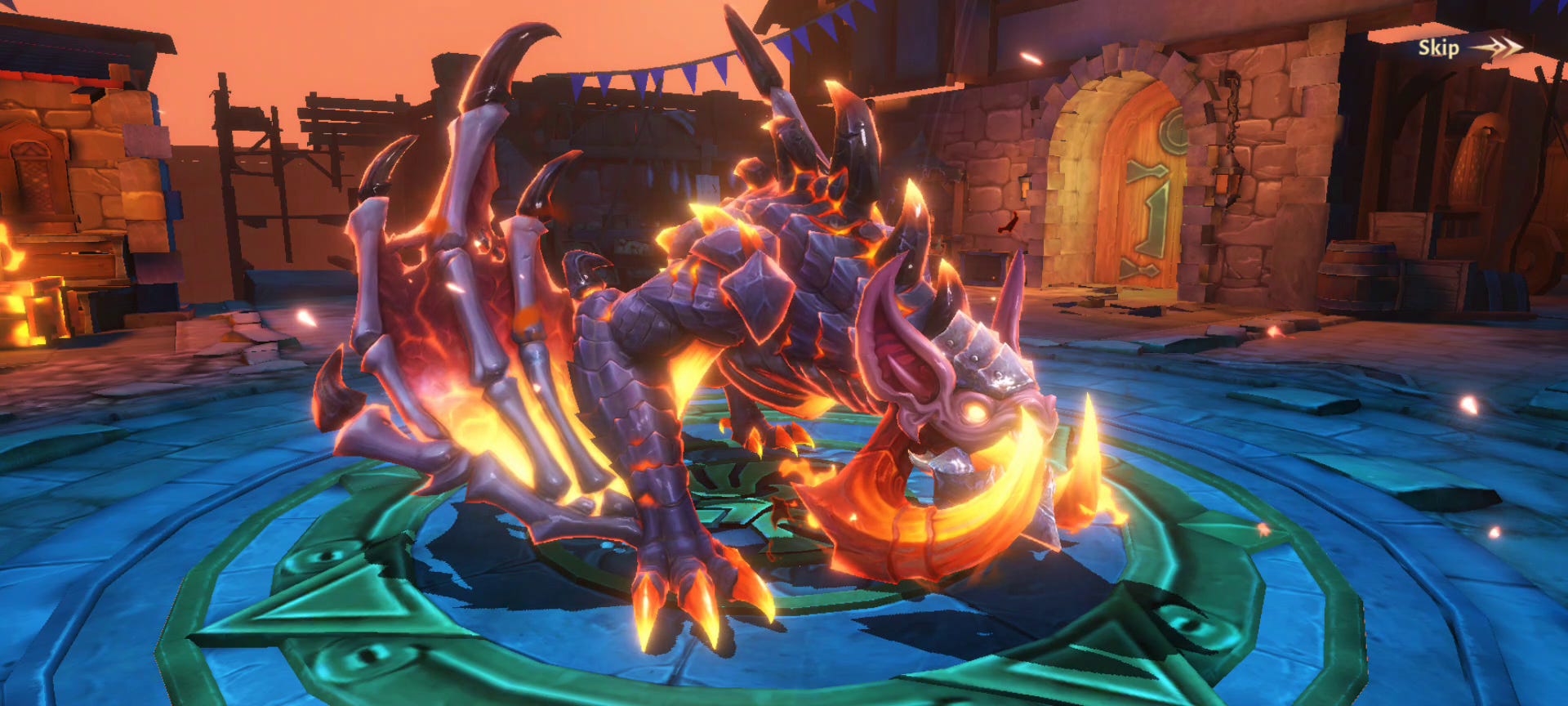
The audio design is OK — the soundtrack is atmospheric and fairly diverse, and the voice acting is solid, although sometimes you can hear file compression artifacts.
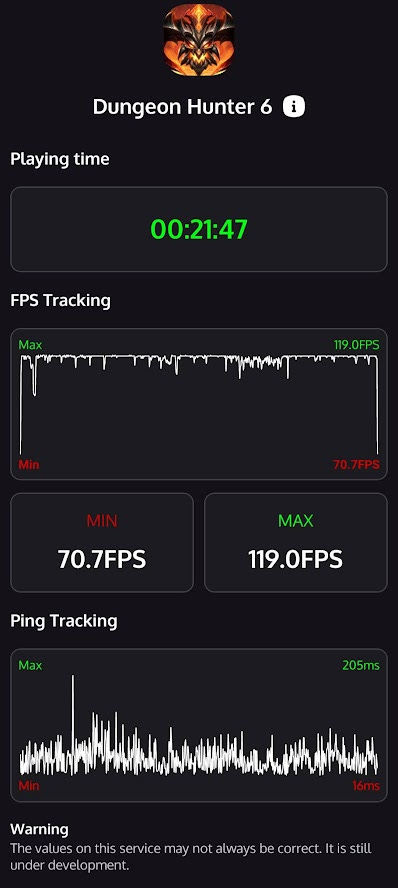
Performance-wise, the game runs very well. Throughout the entire experience, framerate stayed around 120 FPS. The only drops I noticed occurred when the game allowed you to play while it was still loading textures (since the Play Store download is only 1 GB, and the remaining 3 GB are fetched after launch).
3. Ads & Microtransactions
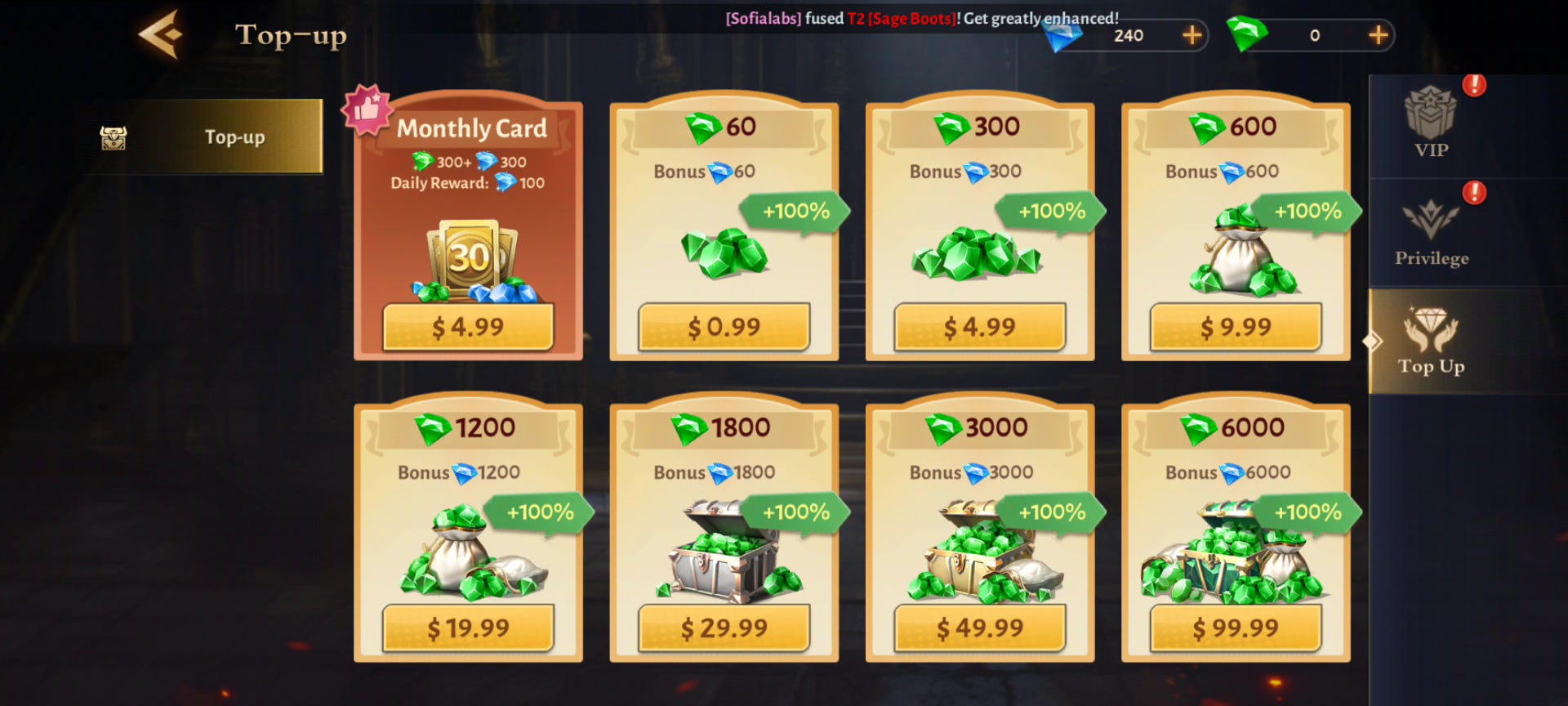
Dungeon Hunter 6 doesn’t display video ads or offer bonuses for watching them, which is, in theory, a rare upside in mobile games. However, instead of ads, the player is constantly bombarded with offers to buy premium currency packs, convert currency X into Y, or — get this — a trial purchase of a premium pack, which you can supposedly refund after some time. There are at least four types of premium currencies. Prices for green crystals, which can be exchanged for other currencies or items, range from $0.99 for 60 to $99.99 for 6000 (and you get the same amount of blue crystals as a bonus). There’s also a monthly subscription for $4.99, which grants 100 blue crystals per day.
4. Verdict
Dungeon Hunter 6 is a terrible game, created with no real concept and solely for the purpose of extracting money from its players. It makes no real demands on the player during gameplay — it makes decisions on its own or allows for automated handling of tasks that should ideally be done manually (but of course, that takes too much time, and you have to play fast so that the numbers grow faster). Compared to previous entries in the series, this is a disgrace — a slap in the face to the franchise — and I completely fail to understand why Gameloft even decided to release this. I strongly advise against playing DH6 and recommend either trying one of the earlier games or skipping the series entirely.