

Mutants: Genesis Review
It's a challenging game where you will often face defeat from people with better deck-building skills or RNG favour, but every victory is absolutely satisfying.
There are plenty of CCG (Collectible Card Game) titles on the market, especially on mobile devices – over the years we've seen gems like Hearthstone, Dawncaster, Legends of Runeterra, the AI slop I reviewed recently called LYSSA: Goddes of LOVE, and even the now-defunct TES: Legends. At first glance, every one of these games seems the same, but it's the mechanics and the available cards that truly make the difference. That was also the case for me with Mutants: Genesis, which I only heard about a few days before its May 20th release. All I knew back then was that it’s a some sort of sequel/reboot of Mutants Genetic Gladiators released in 2014, which until now has been downloaded over 10 million times. The promotional materials didn’t exactly blow me away, but as they say, the devil is in the detail – and after playing it for a couple of hours, I don’t think I’ll be abandoning this game anytime soon.
0. TL;DR
Developer: Celsius Online
Release date: 20 May 2025
Genre: Collectible Card Game, Singleplayer, Co-op, Competitive Multiplayer, Always-online
Price: Free w/ MTX
File size: ~1.2GB
Reviewed on: Motorola Moto G82
Pros: Decent graphics and audio design; unique Evolution system and cards symbiose; no mid-roll ads; self-explaining campaign-tutorial and co-op fights
Cons: Deck building requires time and knowledge; RNG is very punishing; performance issues here and there; UI is not that responsive
Download: Google Play
Gameplay:                  4/5
Audio Visuals:             5/5
Accessibility:             3/5
Ads & Monetization:        4/5

FUN FACTOR: 4/51. Gameplay
In Mutants: Genesis, you play as a young Psycog—a person with unique “psionic” abilities that allow them to control the minds and bodies of mutants. The reigning champion of the Xtreme Mutants League, a competition between Psycogs, has stepped down, and now a new champion is being sought. With adult “puppeteers” in short supply, the corporation behind the entire spectacle decides to train young Psycogs—and you’re one of them.
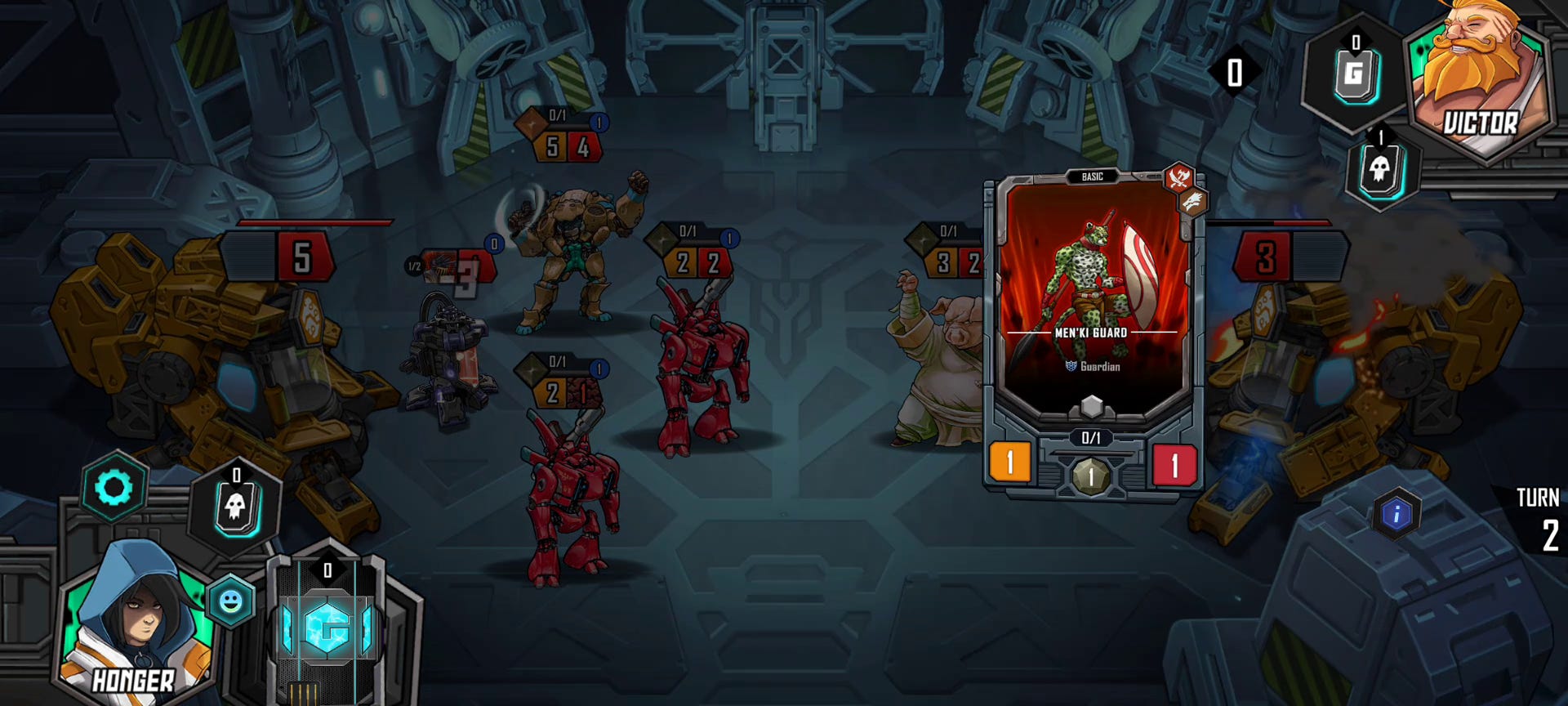
The single-player campaign serves primarily as a tutorial, lasting around 30 minutes and introducing the basics of gameplay, mechanics, and unit types. After that, you can choose to duel each of the six available decks or jump into PvP matches—or continue the campaign.
As mentioned, there are six card decks in the game: Blades, Mystic, Necro, Space, Tech, and Zoo. Each has a unique combat style—Blades focuses on strong, self-sufficient units; Tech centers around self-repairing robots and rebuilding from scrap left by fallen allies; Zoo uses weak creatures that grow stronger over time by boosting each other while remaining on the battlefield.
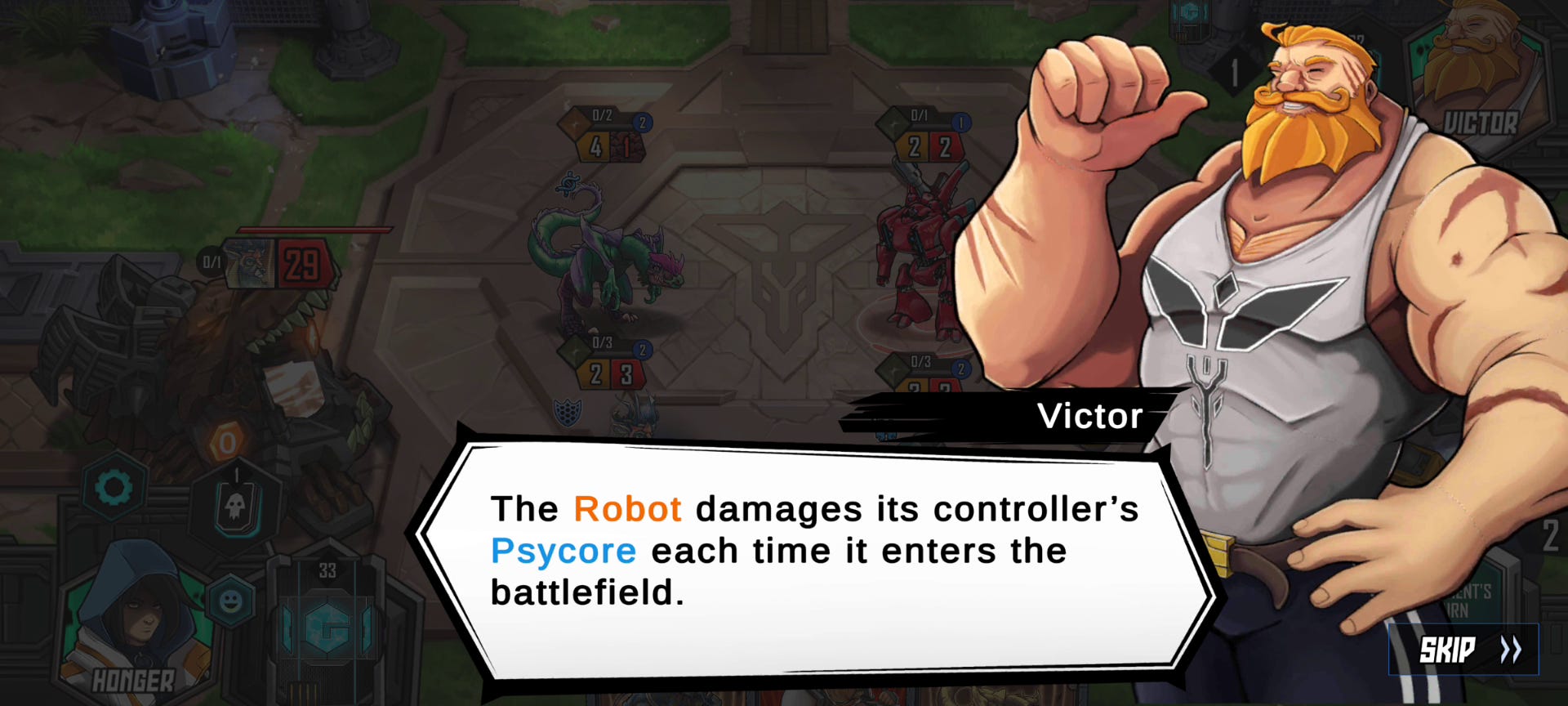
Units come in two types: basic and advanced. Basic units can be played immediately, while advanced ones need to incubate for a few turns before entering the battlefield. Basic units can evolve using EVO points, earned by destroying enemy cards or using special cards. Each basic card can evolve up to four times, gaining increased health and attack power with each evolution.
Units also have special abilities—for example, Sir Puggington is a guardian, meaning his presence forces the opponent to target him first. He gains bonus attack power during the enemy’s turn (making him stronger on defense) and gets even more powerful if there are other attack-boosted cards on the field.
There are also building cards, like extra incubators (letting you hatch more advanced cards at once) or shields that protect your Psycore. Special cards are available too, which can grant EVO points to a specific unit, let you discard a card to draw two new ones, or deal damage directly to the enemy.
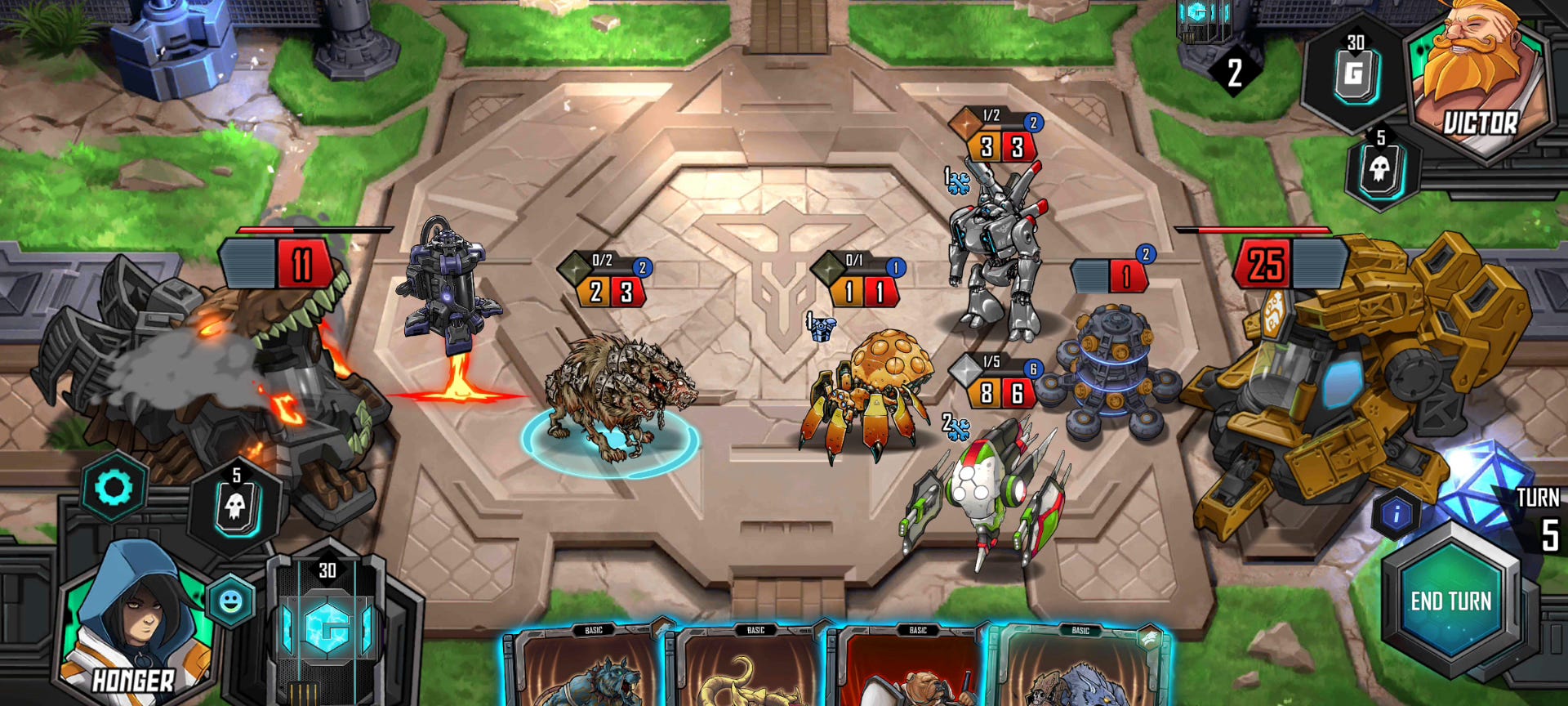
Gameplay itself is fairly straightforward—the goal is to reduce the enemy Psycore’s health to zero before they do the same to yours. Because of the range of mechanics and card combinations, matches can be quite long—my first PvP match lasted nearly half an hour, but another game lasted less than 10 minutes. Again, the blessings of RNG god.
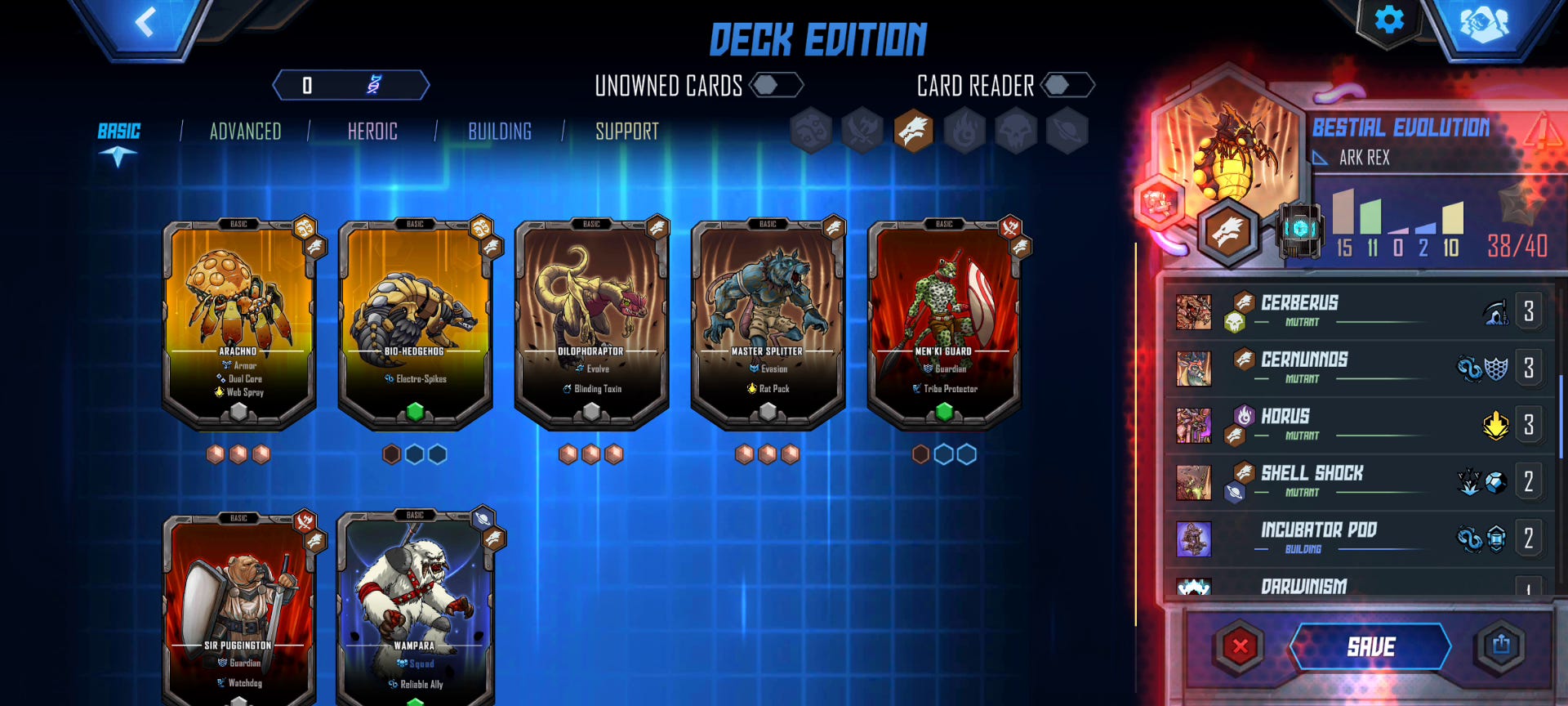
However, the most important element of Mutants: Genesis is deck-building. I'm not sure if there's a hard limit on combinations, but there are certainly a lot of possibilities. Each faction has two types of Psycores with different starting units, and decks can contain up to 40 cards. Of course, you can technically add any card to your deck, but you can only actually play those you’ve unlocked—either by purchasing them with in-game currency (mutagens) or by opening capsules (of which there are several types, each guaranteeing different card rarities or types). These are earned by completing daily quests or spending credits.
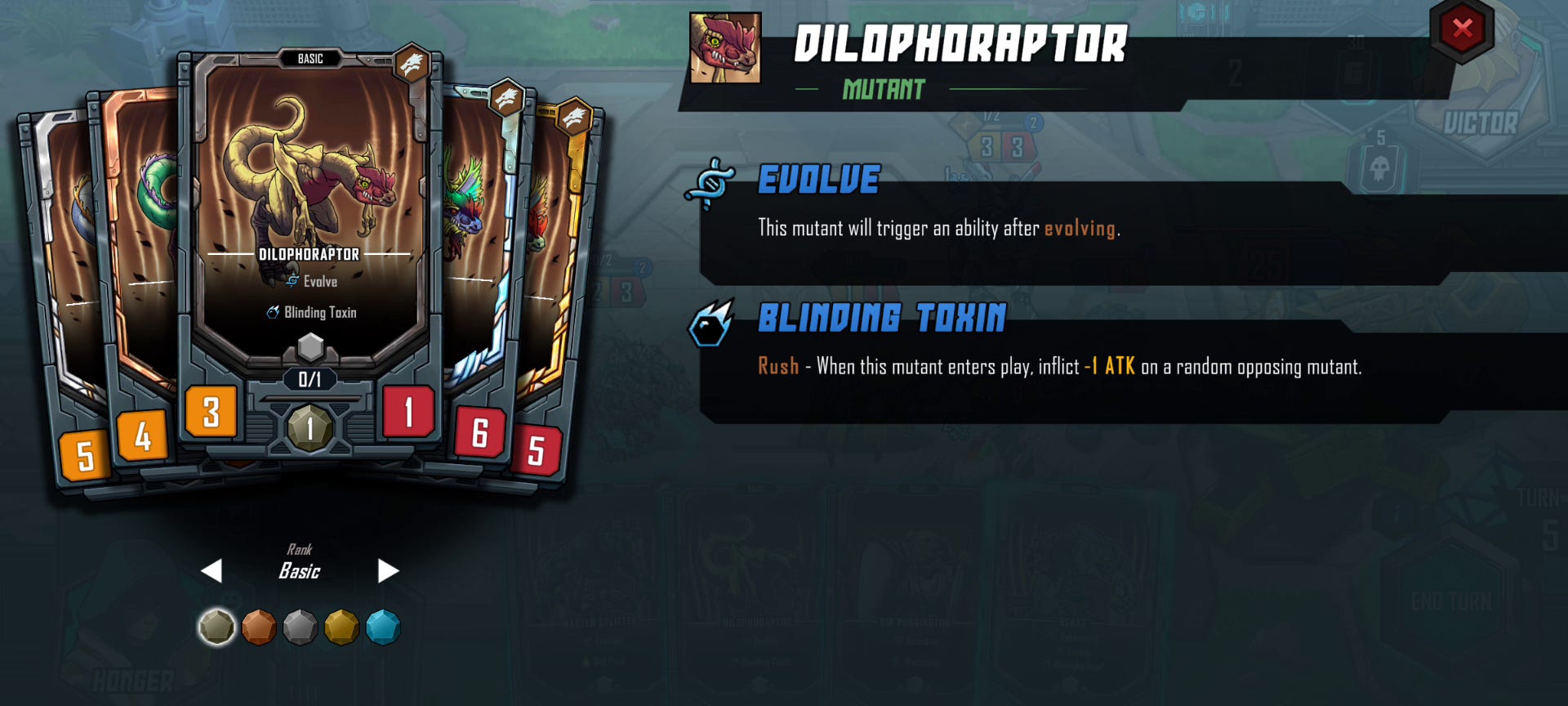
Deck-building can be very time-consuming, and while the game allows you to import decks (provided you have a code from someone), I haven’t come across any reliable source of pre-made setups yet.
2. Visuals, Audio & Performance
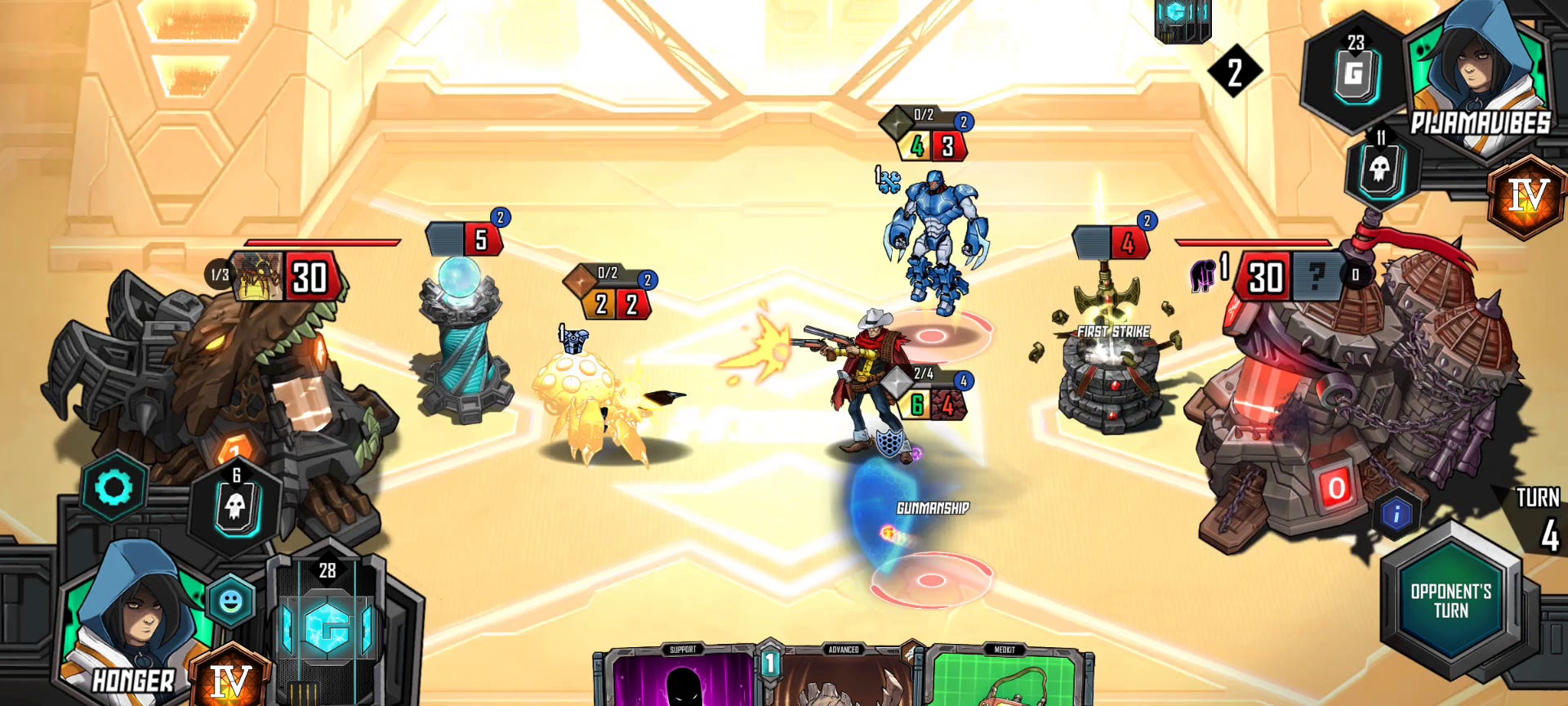
The game features a detailed, somewhat cartoonish art style that reminds me a bit of Darkest Dungeon. Battles take place on a 3D arena, with the Psycores modeled in 3D, while the units and buildings are animated 2D illustrations. They come with ambient animations, and attacks trigger various screen effects—at times, there's a lot going on visually, but I never felt overwhelmed by the VFX.
The audio design is solid. The game opens with an animated intro featuring voice acting, but the main campaign itself doesn’t include voiced characters. The music doesn’t try to steal the spotlight—it’s somewhat pompous but ultimately unobtrusive, and there's not much else to say about it.
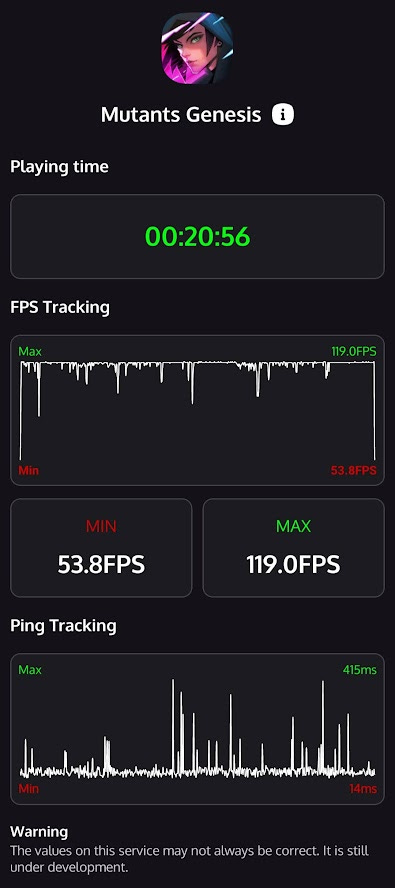
Performance-wise, the game generally runs smoothly, though certain effects caused frame drops from 120 to 60 FPS or even lower. Some animations also seem to be locked to 30 FPS, which results in a slightly jarring visual experience during those moments.
3. Accessibility
Although the game was released on both mobile devices and PCs, it feels like the PC version was the primary focus. The interface doesn't scale well—text can sometimes be as small as half a grain of rice, making it potentially unreadable on lower-resolution screens.
There aren't many settings available; you can't adjust graphics quality or visual effects—only audio levels and the game language can be changed.
The game tries to offer contextual descriptions by holding your finger on elements, but the tooltip appears directly under your finger, making it impossible to read (and dragging your finger away removes focus). On PC, holding the right mouse button displays the tooltip, which is far more convenient. During battles, cards could also show a bit more visible detail—such as health and attack values—without requiring a press-and-hold interaction that opens a separate info window.
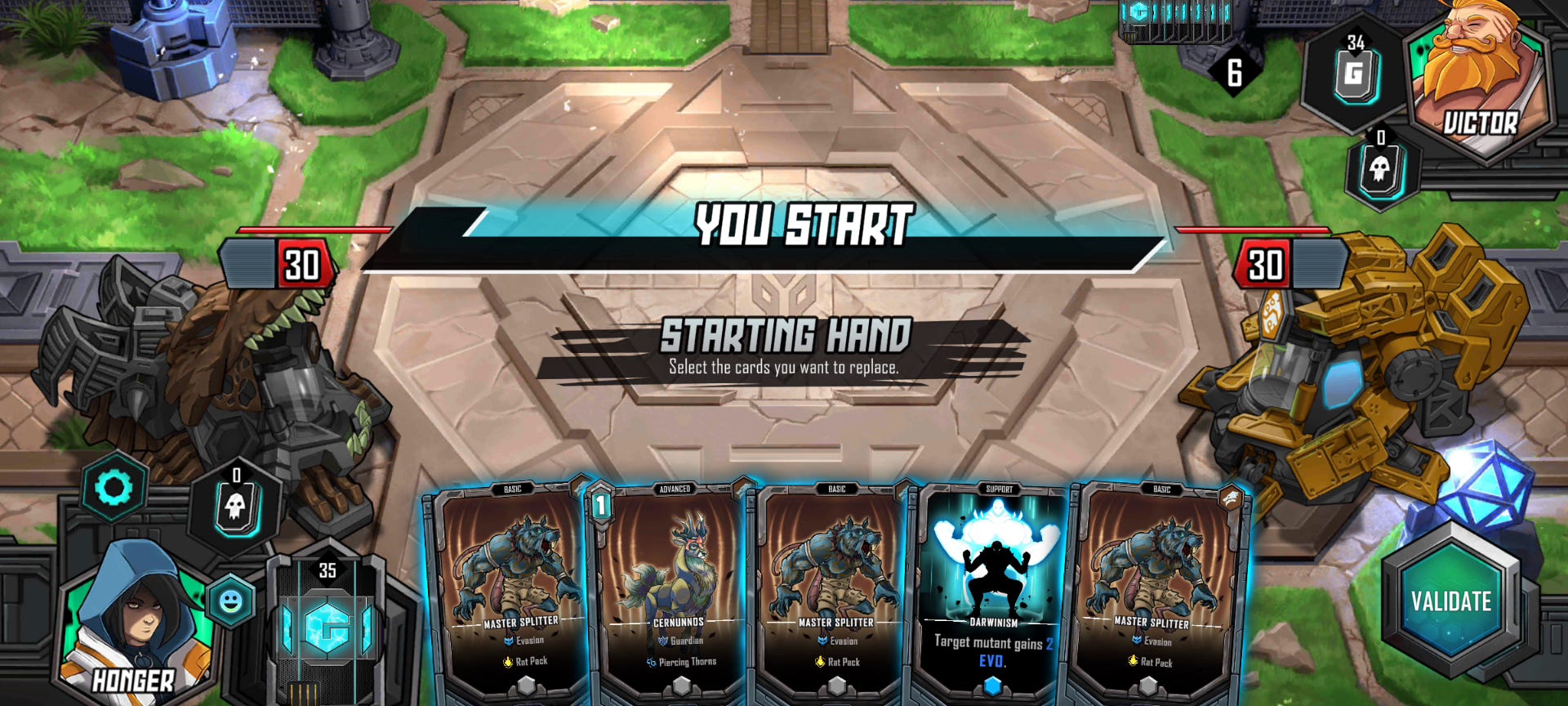
That said, the rest of the UI is relatively clear, and most things are described in a way that's easy to understand.
4. Ads & Microtransactions
One notable aspect of Mutants: Genesis is the complete lack of advertisements—there are no pop-ups at launch or interruptions during gameplay that would prevent the player from taking actions. However, given that the game has only just launched, it wouldn’t be surprising if mid-roll ads were introduced later, especially as the player base grows and server or update maintenance costs increase.
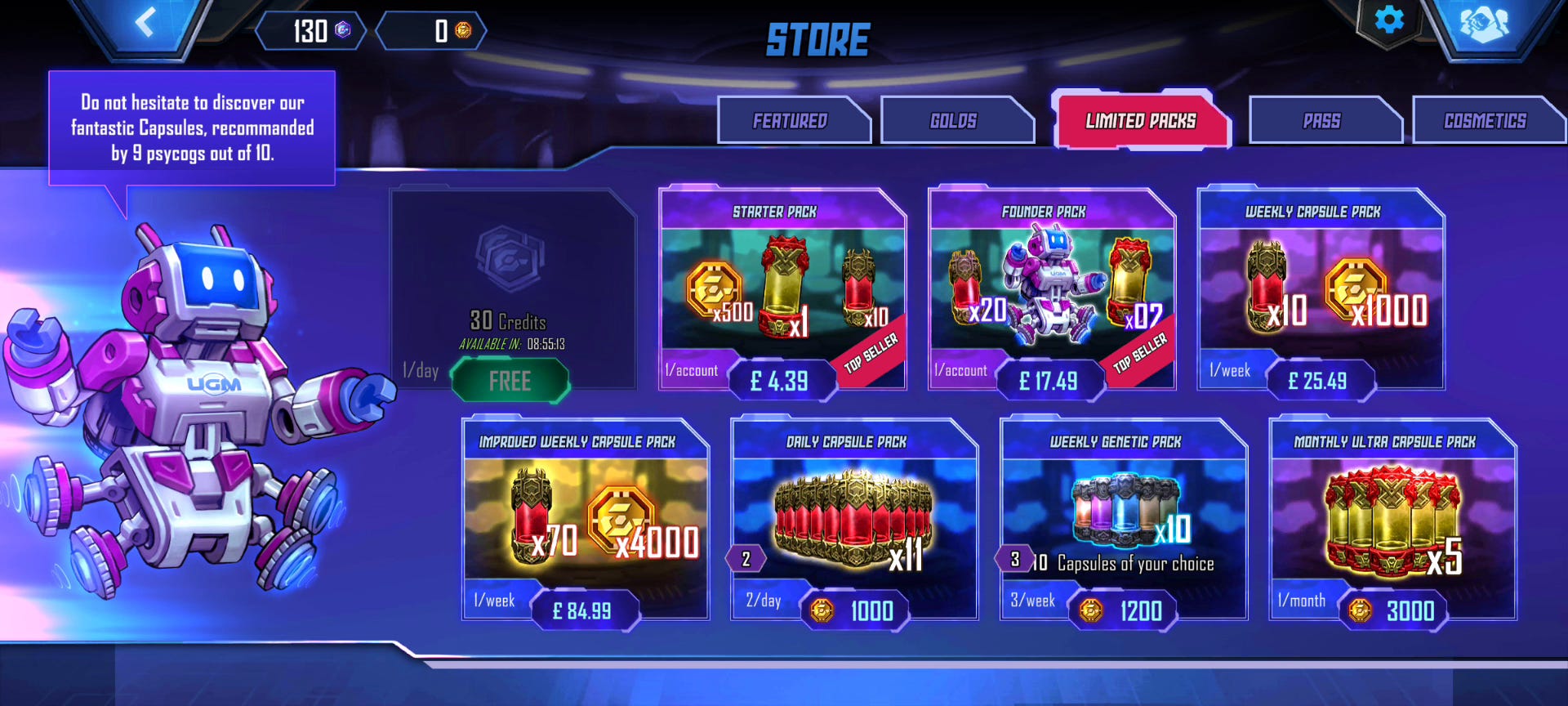
The in-game shop, however, is quite extensive. The premium currency is called "golds" (possibly a typo?), and pricing ranges from £4.39 for 150 golds to £84.99 for 4,500. Your first purchase gives you double the currency. There are also a few starter packs available that include capsules and gold, a “Genetic Pass” that unlocks additional daily and progression rewards for £8.49, and a monthly “Competitor” subscription that gives a set amount of gold each day for £4.39.
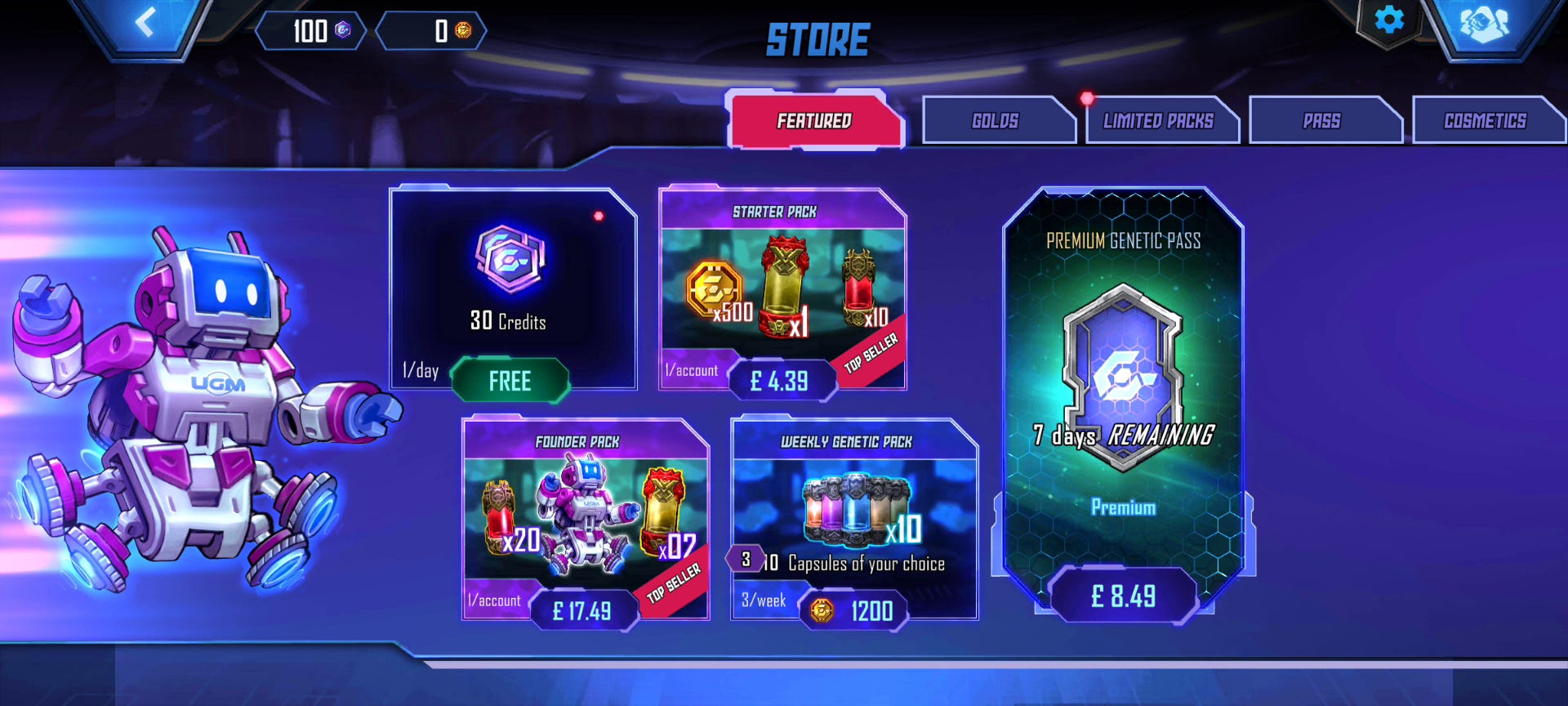
Capsules can be purchased in bundles using gold (for example, 11 Booster Capsules cost 1,000 gold and are limited to two purchases per day). Gold is also used to buy avatar skins and card back designs.
5. Verdict
Mutants: Genesis is definitely an intriguing and engaging game, well-crafted and capable of offering hours of gameplay. Its mechanics are richly developed, deck-building allows for countless combinations, and each PvP match presents a fresh challenge. That said, the learning curve is quite steep—especially for players like me who aren’t typically into CCGs. However, with time, guides and pre-built decks are bound to appear, allowing players to focus more on the battles themselves.